
How We Run Pilots
A pilot should not begin until the next decision is clear.
Most pilots fail because they start too broad, lack one accountable owner, or try to prove everything at once. Loop Exit helps teams turn one live bottleneck into a bounded test with a clear review path, so the organization can decide what to commit, what to refine, and what to stop.

What this problem looks like

Use this path when the organization is already under pressure to move, but the pilot still lacks enough structure to earn trust.
multiple teams want different things from the same pilot
ownership is split across business, tech, and vendor
the use case sounds promising, but the mission is vague
reviews focus on status, not evidence
stop criteria have not been agreed
the pilot is being used to reassure leadership rather than test a real bottleneck
The issue is not whether the idea is interesting. It is whether the test is specific enough to support a real next decision.

A pilot earns scale by proving stable decision conditions.
A valid pilot needs one owner, one KPI, one trusted basis for review, and one clear decision point. The goal is not to prove everything. It is to prove enough to decide well.
Loop Exit helps define that test before delivery begins.
What good pilot discipline looks like
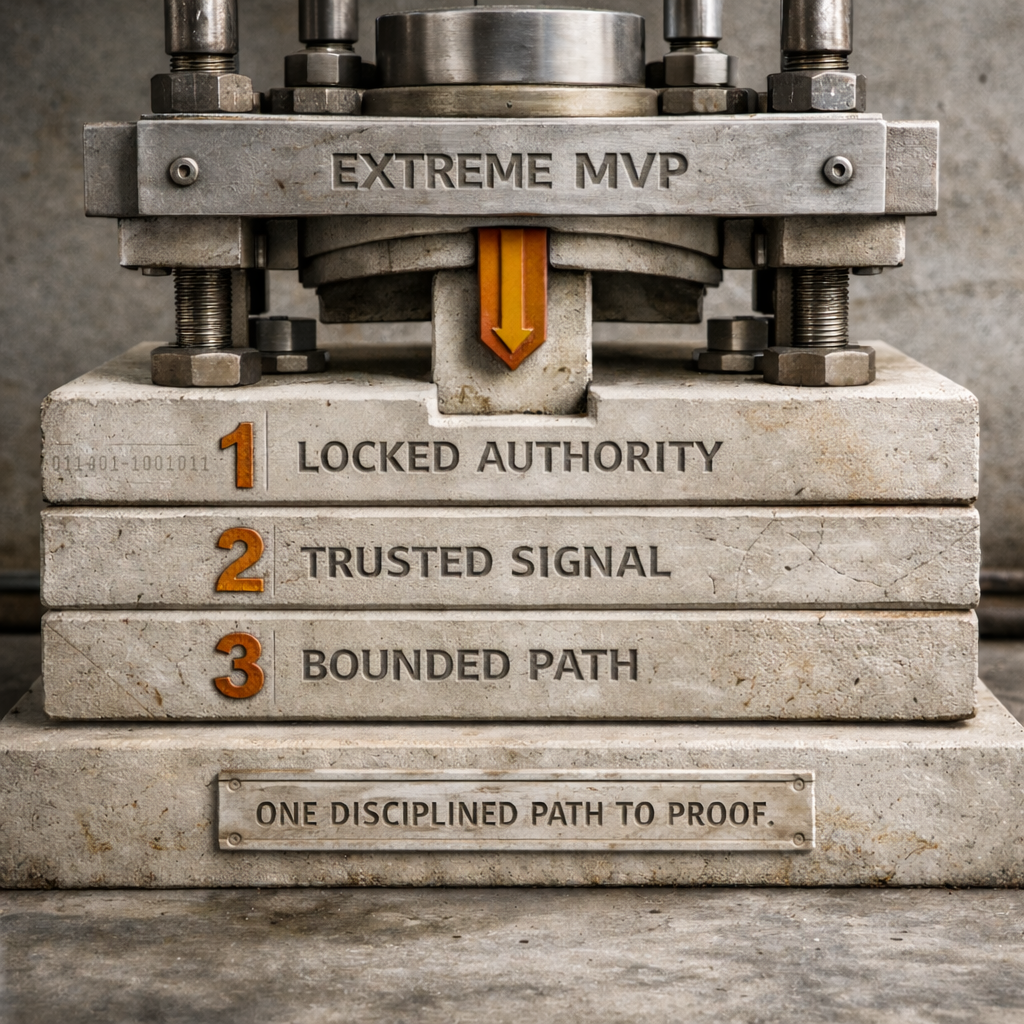
What good pilot discipline looks like
Before the pilot expands, the team needs:
one named owner
one business reason to exist
one KPI that matters
one small trusted signal surface tied to that KPI
one review cadence
one pre-agreed stop condition
You do not need more dashboards. You need a smaller evidence surface that tells the team whether to proceed, refine, or stop.
Clear ownership. Trusted information. Governed workflow.
Related paths

Related perspective
Decide what deserves scoping before commitment hardens.
Use future constraint to eliminate weak initiatives early.
If the bottleneck is real but the test is still weakly framed, start with the Sprint before delivery begins.