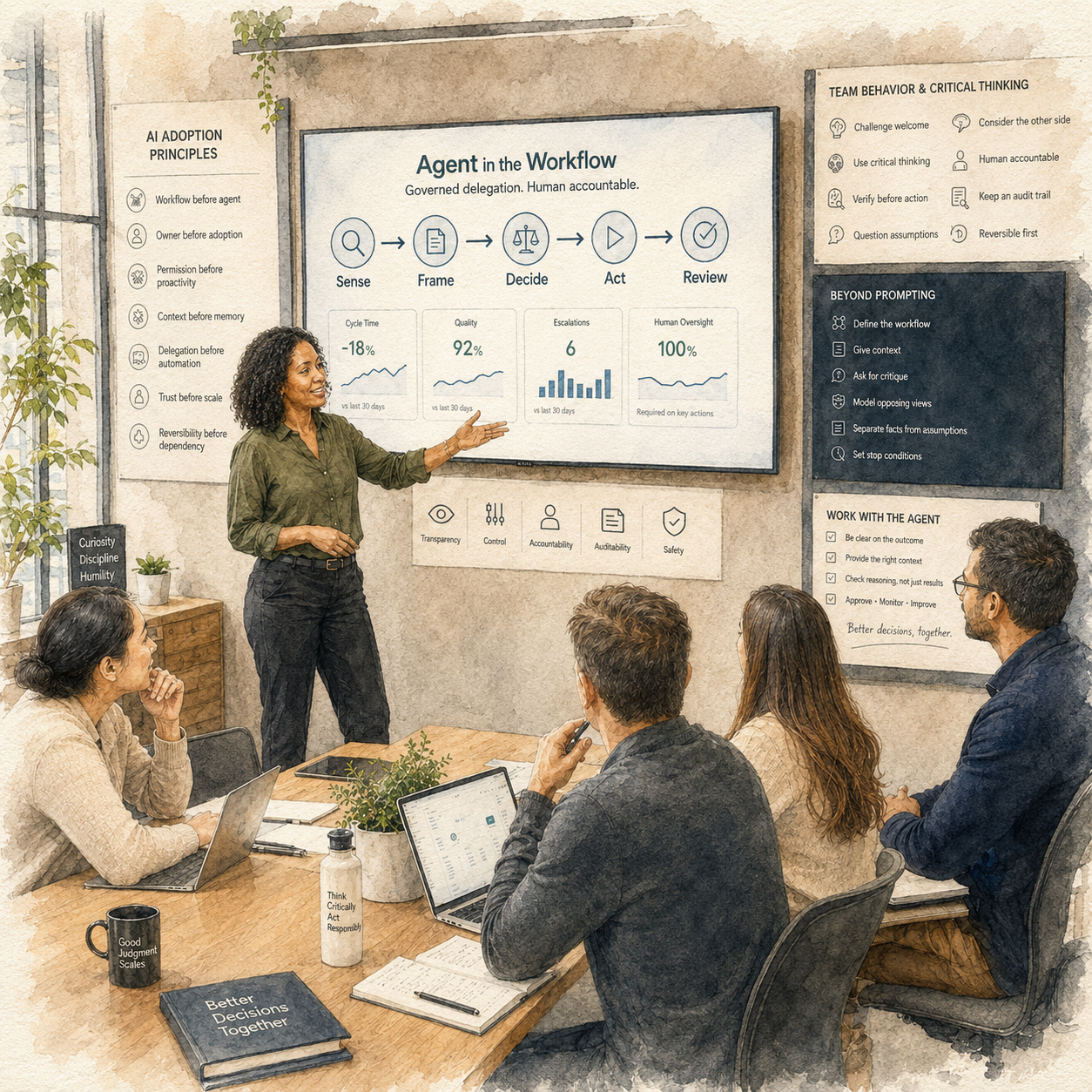
Agents enter the team workflow
As AI agents enter team workflows through Slack, Teams, Google Chat, Outlook, SharePoint, and shared project channels, enterprise adoption becomes a team behavior problem as much as a technology problem. The operational risk is not only inaccurate output. It is unmanaged input: who can invoke the agent, what context it can absorb, whose framing becomes default, what it remembers, and who remains accountable when the answer sounds right but is wrong.
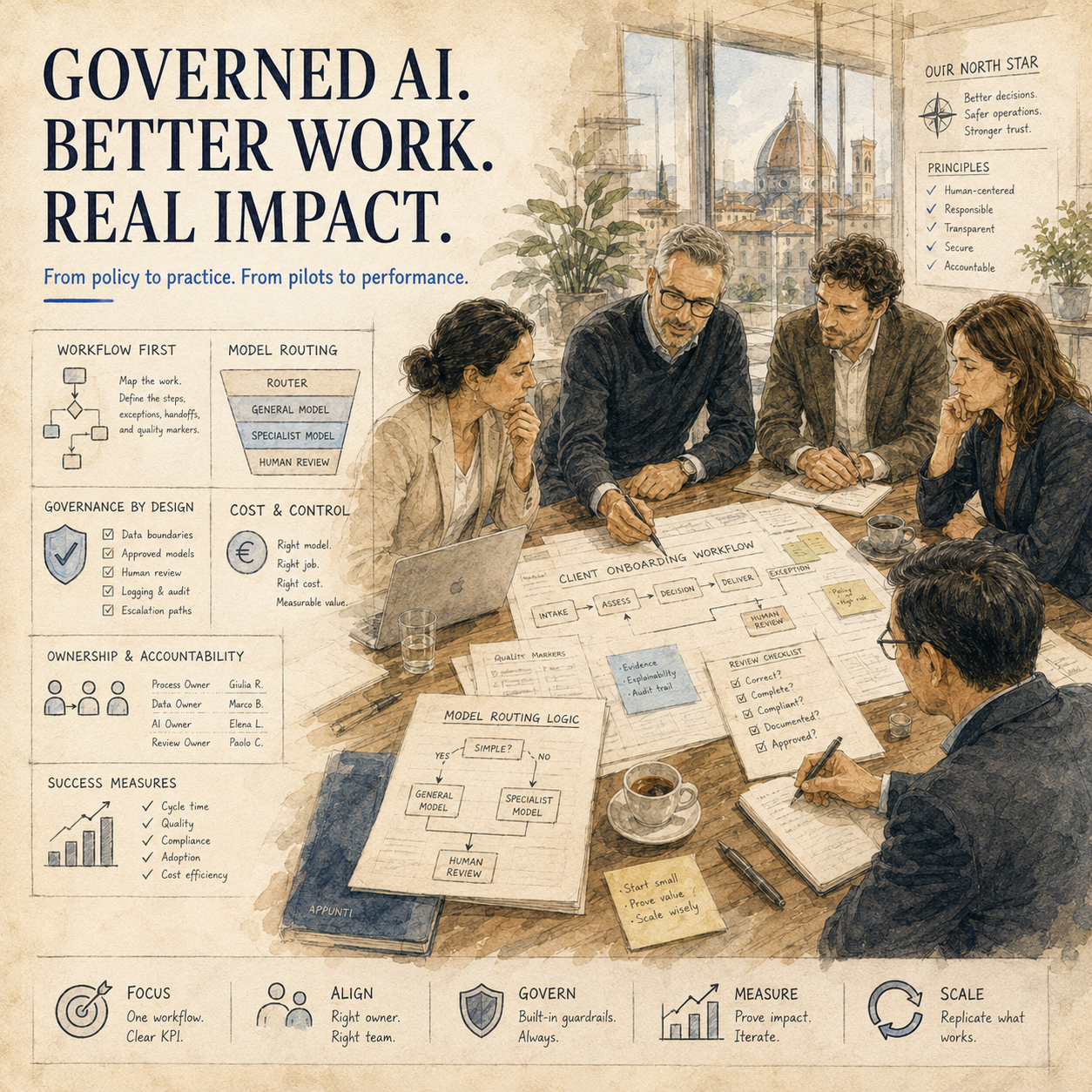
AI pilots need governance loops
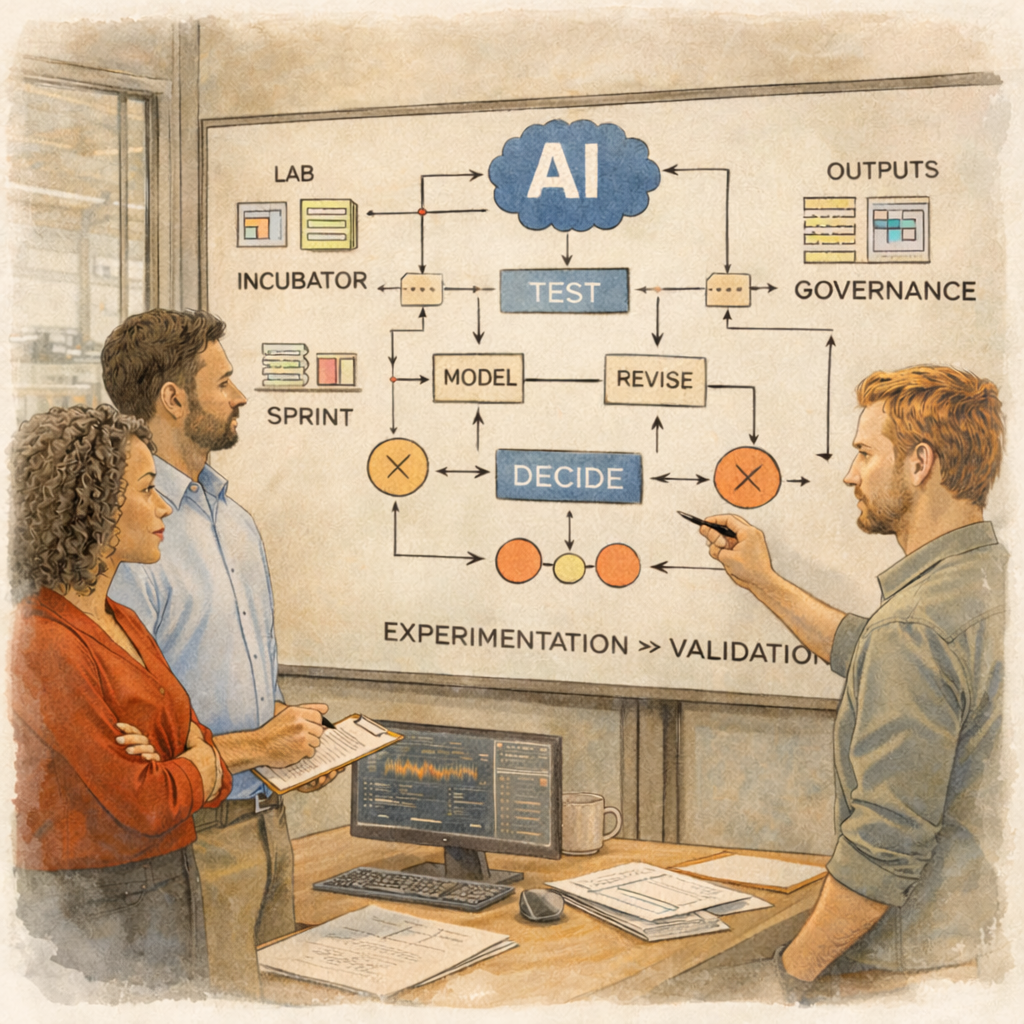
In regulated sectors, AI adoption does not become operational because teams have access to tools or a pilot produces a strong first output. Insurance, fintech, banking, healthcare, and other compliance-heavy enterprises need a tighter operating unit: one workflow, one owner, one governance boundary, and one proof threshold.
The practical shift is from isolated experimentation to governed workflow loops that can be reviewed, audited, improved, and scaled.
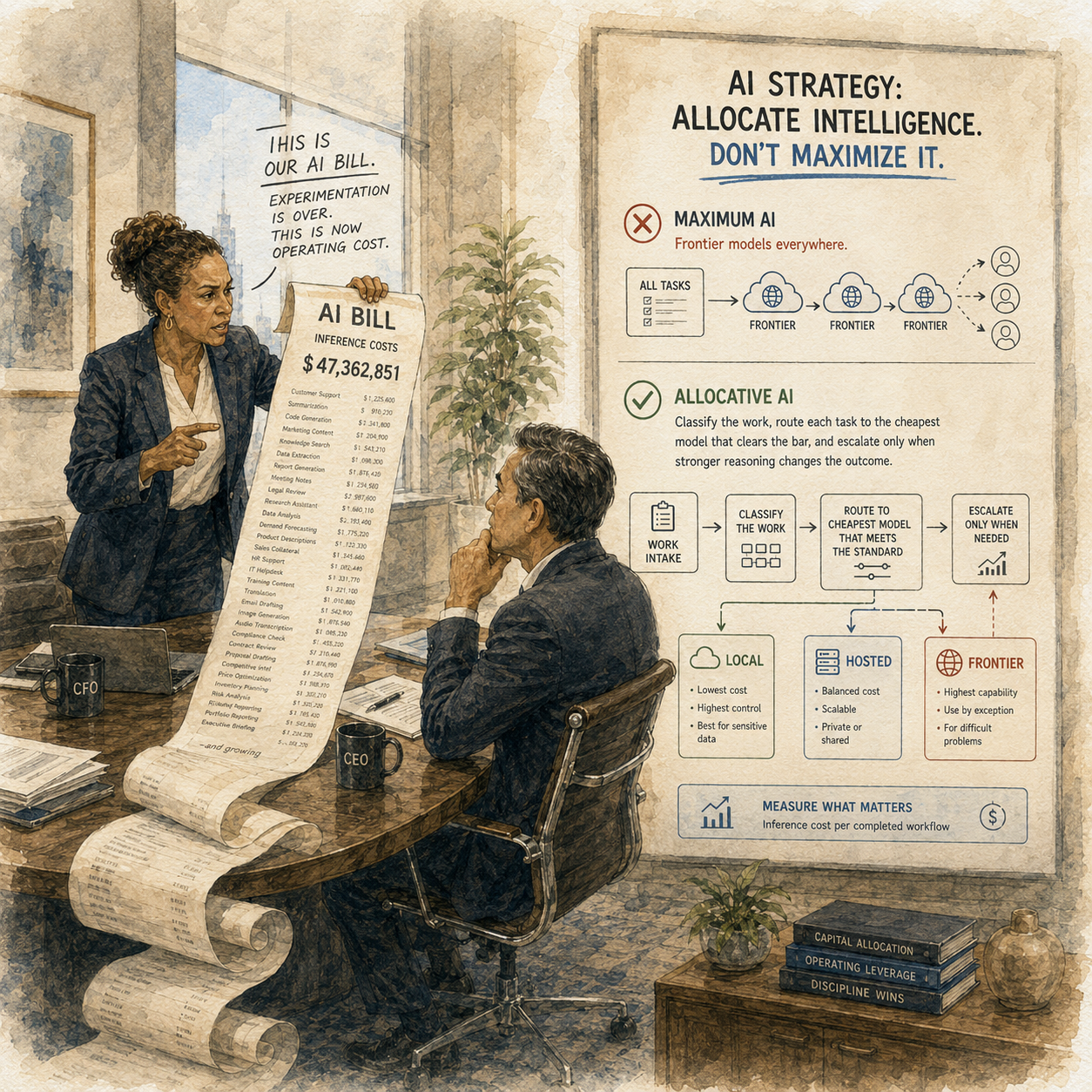
The AI bill has reached the CFO
As AI moves from experimentation into recurring operating cost, executives need a clearer way to decide which workflows deserve which level of intelligence. The next advantage will not come from using the strongest model everywhere. It will come from allocating intelligence according to value, risk, exposure, and proof.

The org chart is no longer enough
As AI moves closer to live workflows, competitive advantage depends less on model access and more on the operating layer that defines decisions clearly, grounds them in trusted state, and supports governed action. This piece explains why decision integrity is becoming the real infrastructure for AI value.
Culture follows the loop
As AI moves closer to live workflows, competitive advantage depends less on model access and more on the operating layer that defines decisions clearly, grounds them in trusted state, and supports governed action. This piece explains why decision integrity is becoming the real infrastructure for AI value.